25.12.15

Crowning Achievement

     With the fall of the Western Roman Empire and the loss of Roman political and educational traditions during the Dark Ages, conflict ignited with every coronation, declaration, and decree whether between kingdoms, peoples, or tribes. During some of the darkest days of the Dark Ages, Charles Martel, a Mayor of the Palace for the Frankish Merovingian kings, fought off a Muslim invasion force that kept lands north of modern Spain from Islamic control. The grandson of Charles Martel, Charlemagne (Charles the Great) eventually held the legitimate title of king and sought an expanse in control of European lands. A great conqueror from a family of competent leaders, Charlemagne earned a reputation as a man of ambition and  strong character and as a man who sought to establish a new permanent empire.
     The legacy of Charlemagne extends into history, religion, politics, education, and the nearly every conflict between the great powers of Europe over the last twelve hundred years. His influence resulted from the power of his birth, ambition of his mind, strength of his will, and conviction of his heart, but his lasting appeal grew from his title of "emperor" and the unification of a huge swathe of Europe under his reign. While in Rome securing the power of pope from dissenters, Pope Leo III crowned Charlemagne as emperor. The Frankish kings had long been defenders and protectors of the pope, the Bishop of Rome, while Byzantine emperors placed their forces in conflict against the burgeoning Islamic caliphates. With the Frankish king at hand and the Byzantine emperor unreachable and uninterested, Leo III strategized to create an emperor in Europe and a powerful friend to the papacy.
     Charlemagne's coronation during Christmas mass in St. Peter's Basilica, Rome in 800 A.D. changed the future of the world macroscopically. For centuries, European rulers justified their claims to the throne by heredity linked to Charlemagne. To strengthen this connection in the minds of subjects and contestants to the throne, several emperors chose Christmas Day for their coronation ceremonies. The day, the most important Christian day after Easter, also emphasized that the ruler had the favor of God indicating that to rebel against a him was to go against God. Though many Holy Roman Emperors sought coronation by the pope in Rome, Charlemagne's crowning emphasized his dominance throughout the region at the time.
     Charlemagne's influence led others to mirror his example and flaunt their power in a way reflective of the past and strengthen the claim to power by drawing similarities to Charlemagne. His grandson, Charles the Bald, was also crowned in Rome on Christmas Day, 875, but died two years later. Otto II was crowned emperor in 967, the last true emperor of the Holy Roman Empire.
     Other than those two men with strong bonds to Charlemagne and significant influence on the course of history, the other coronations seem almost inconsequential, but of thousands of individuals crowned through European history, few could pretend the prestige of Charlemagne's might. In the year 1000 A.D. Stephen I became the first king of Hungary at his Christmas coronation. Henry III of the Holy Roman Empire was crowned in 1046, and William I, the Conqueror, was crowned King of England in Westminster Abby in 1066 just months after the Battle of Hastings. With the Crusades becoming increasingly important, Boudouin I was crowned king of Jerusalem in 1100, Roger II earned crowning as king of Sicily in 1130.
     All these coronations of kings and emperors occurred on Christmas Day, but many coronations could not wait until Christmas because the ruler had to solidify power claims immediately to ward off rivals. As history wore on and Charlemagne's direct impact became diluted, fewer Christmas coronations were attempted, but Charles II was crowned King of Scotland in 1651. That so many were able to link their power to Charlemagne and Christendom is a testament to the legacy of European kingship.
     While Christmas is traditionally a religious celebration, men never stop living. Natural disasters, battles, and significant political events have all occurred on Christmas Day, just another day in the year. Clovis, King of the Franks, baptized himself on Christmas in 498. This event linked the Frankish realm to Rome and secured Christianity in Europe as a legitimate force in post-Roman politics. Without this Charlemagne would not have been crowned in Rome by a pope.
     Christmas is a special time of year and has been celebrated as the birth of Christ since the fourth century. This day marks the anniversary of Charlemagne's, Otto the Great's, William the Conqueror's, and Emporer Hirohito's coronations, the 1717 flood Deltawerken, and the resignation of Mikhail Gorbachav as General Secretary of the U.S.S.R. Nearly every country and culture celebrates Christmas in some fashion from religious services, religious holidays, gift exchanges, and seasonal traditions. May you all enjoy your holiday whenever you celebrate it.


__    
Agatha Tyche

16.12.15

Water Trains

     The cheapest way of shipping large quantities of marketable goods or military supplies is over water. Because of buoyancy reducing the object's weight, rivers are the bloodlines of civilization and ocean access is one of the most important factors in determining a nation's economic status. The United States has huge navigable coasts with protected harbors in the Atlantic Ocean for trade with Europe and Africa and the Pacific Ocean for trade with China, India, and Japan. The appreciation of ocean access has only become fully acknowledged recently. While ancient Phoenicians, Greeks, Romans, and the Chinese all used waterways for shipping and military purposes, little is known if the ancients realized that trade is what created a nation's economic might and that trade is controlled through water.
     After European ascendance with colonies on every continent, England became a huge proponent of naval power. Though the Dutch East India Company established control over spice islands before the British, the British did it better, bigger, and longer. Controlling the oceans without a challenge for well over a century, the British demonstrated that oceanic power controlled trade and led to a prosperous empire.
     As the Industrial Revolution sparked the mass production of goods, producers needed to expand market reach to sell surpluses never conceived of before. Britain developed a man-controlled inland shipment system built around manipulation of rivers to aid shipping routes: canals. Within a few years, canals threaded over the English countryside from small supply villages to the massive factory hubs of the great cities. The United States joined in the canal race, and the Erie Canal, one of the longest ever built, demonstrated the vast improvements offered by these waterways. Before the Erie Canal, goods from the Great Lakes to New York City took two weeks on wagon roads. When the canal opened in 1825, shipping prices dropped to ten percent pre-opening price and the travel time halved.
     Mostly forgotten in the modern age because of the effectiveness, greater speed and decreased terrain limitations of the locomotive, canals changed the landscape of industrializing countries by easing trade and transport and developing lock systems. The lock system for canals leveled long stretches of ground that sped railway creation for trains just decades later.
     Canals still have an important impact on the global economy. The modern Suez Canal, completed in 1869, linked Britain with her Asian colonies, notably India. The British protected this artery from Napoleon and through both world wars. The other major modern canal, the Panama Canal, was built by the United States in 1914 to link the east and west coast of the country by halving the time of sailing around the Cape Horn. Both the Suez and Panama Canals are vital for international trade in the modern era while many smaller canals are now abandoned or only used as tourist attractions and for recreational use.
     Though the longevity of the canal boom was shorter than a human life time, the huge improvements on the speed and quantity of trade to previously isolated areas opened the world to the full effects of the Industrial Revolution and to the power of change. The canal made it possible for man to think of large-scale geological change to achieve his needs over the long term, and from that, civilization has not looked back. Though most of the tracks for the water trains have long been locked, the trade history still flows freely.


 __    
Agatha Tyche

12.11.15

The African Guerrilla

     The character of leaders varies on the culture, period, and circumstance, but the greatest variable and determinant is the personal traits of the individual. Paul von Lettow-Vorbeck is a remarkable figure as a leader in World War I while the rest of his life and further exploits have been criticized and his name removed from honorific tributes from street names to statues. Despite public backlash for personal affairs post mortem, the men who served under him on his World War I campaign, especially his Africans, flew from thousands of miles away to attend his funeral.
    Growing up in a Prussian military family, Lettow-Vorbeck began his career early and had experience in China and Africa before the War to End All Wars. Injured in the German West African (Namibia) uprisings in 1904, he gained fighting experience in the African jungles as well as knowledge of the effectiveness of guerrilla warfare against a larger, better equipped enemy. In 1914, just prior to the outbreak of war, Paull von Lettow-Vorbeck gained command of German East Africa (Tanzania). Ignoring a direct command not to mobilize for war, he organized his 250 Germans over the 2,500 native African Askari.
     The first true test of Vorbeck's ability to command outnumbered troops without hope of support or provision came when a British flotilla attacked Tanga with a force that outnumbered the defenders eight to one. Strategically retreating into the jungle and splitting the army into small fighting bands, the Germans successfully confused the enemy and forced their retreat. In all, the Britsh-Indian force suffered about 4,000 casualties to the defenders's fifteen Germans and the fifty-four Askaris. Thus began a four-year resistance by the only remaining German colonial force in Africa.
     Von Lettow-Vorbeck's strategy was simple. Since the German forces would not be able to defeat the huge British forces on the continent, the Germans would deny the British a victory of their own. This guerrilla process tied up nearly 100,000 Allied troops in a side-theater colonial war against fewer than 10,000 German troops without support of any kind. Continuing from his victory at Tanga, Lettow-Vorbeck split his forces and attacked British, Belgian, and Portuguese outposts and railways throughout East Africa including Kenya, Tanzania, Mozambique, Uganda, and Zimbabwe.
     With no supplies reaching the Germans except those scavenged from the countryside and stolen in raids, by 1917 the Allied forces pinned Lettow-Vorbeck's forces down in an area that forced a battle while being outnumbered more than three to one. The Battle of Mahiwa was the first and only major confrontation the Germans and Askaris had against the Allied forces, but even pitched battle proved disasterous for the assailants. After careful scouting, Lettow-Vorbeck's 1,500 troops fought off a direct assault by 5,000 men then outflanked them and bayonet charged against machine gunners. In this battle, the Allies accumulated 3,000 casualties while the Germans suffered only 519.
     In September 1918 one of Lettow-Vorbeck's threen main armies was captured, but the German commander fought on for another two months. When word of the November 11 Armistice reached General Paul von Lettow-Vorbeck by a British POW, the chivalrous leader dutifully surrendered to the surprised and relieved British. After four years of constant fighting without any support, relief, or resupply from his nation, Lettow-Vorbeck's German force never lost a battle and single-handedly made British exploits in Africa throughout the war shameful. His British captors allowed the Germans to go free but held the Askari soldiers in abysmal camps. Lettow-Vorbeck refused to return to Germany until his black soldiers were also released. Historians have credited much of his success throughout the war on Lettow-Vorbeck's treatment of his African soldiers. Promoting several natives to officer positions for performance, his reliance on native troops kept his army fitter than the European Allied forces and allowed the German force to exploit knowledge of the terrain and resources. Lettow-Vorbeck's skill, courage, tenacity, and honor earned him the respect of his British opponent, Jan Smuts.
     His return to Germany after the war saw huge support from the populace as they welcomed home an undefeated general in a lost war. Though Lettow-Vorbeck dabbled in politics, with the rise of Hitler's Nazi's he declined any position of power with verbal insults, only avoiding being executed because of his extreme popularity. Throughout World War II, he was kept until surveillance, but no action was taken against him.
     Paul von Lettow-Vorbeck returned to East Africa in 1953 where he was greeted by a group of his Askari veterans singing his regiment song and cheering. For his funeral in 1964, several of those same warriors were able to fly into Germany.
    An outstandingly persistent  man from Germany stood his ground on colonized soil in defiance of the massive enemy that threatened his nationalistic fervor. Never losing a battle, and surrendering undefeated, this German forced the Allies to commit huge numbers of troops to put down one of the most successful guerrilla rebellions in history. Though Lettow-Vorbeck's lost 2,000 men over the four years of the war, the Allies lost over 10,000 men, mostly due to the horrible arboviruses of the jungles of Africa. By using natives, the Germans suffered minorly compared to the Allies who suffered thirty casualties through sickness for every man in battle.
     In a war remembered for the inability of high command to learn the effects and techniques of modern war, Paul von Lettow-Vorbeck stands high, undefeated, and as one of the most successful, adaptable generals of the twentieth century.


 __    
Agatha Tyche

4.11.15

The Pen Is Mightier than the Sword

     The development of human language has been suspected of coinciding with the rise of complex social interactions and technological innovations. As geography, social context, and descriptions for everyday interactions entered into the language, a fuller, more complete world came into view to the inventors of those words. The English language has a strongly documented history of language development. Established as an Anglo-Germanic dialect, heavy Latin elements were interjected with the French conquest after 1066 until establishing a basic format for its modern style about six-hundred years ago. Other languages underwent similar changes with sentence structure, inflections, and vowel shifts influencing pronunciation, spelling, and social affairs.
     Debate on whether language affects perception or perception affects language has been studied, switched, and reverted multiple times over the last century, but a definitive agreement from both sides is that one does affect the other.
     In Namibia the BBC documented the Himba tribe's ability to specifically select minute differences in reds and browns but an almost non-existent ability to express differences in greens. A more documented case in linguistic expression of the visual world is the differentiation in Russian's words for lighter and darker shade. The terminology distinction cues the language user's brain to be more aware of minuscule tone variations. The conclusion of the color-linguistic study found that native Russian speakers were faster and more accurate in distinguishing light and dark blues compared to Latin and Germanic language users that do not have multiple words to describe colors.
     The origin of color perception to real world descriptions dates back to the mid-nineteenth century with Britain's William Gladstone. While reading through The Odyssey and The Illiad, he noticed Homer's odd descriptions of objects. The ocean is often described as "wine dark" and sheep are "violet." Curious, Gladstone tallied the use of color words in the original Greek and found that white, black, and red were the most used colors followed by yellow with almost no reference to green and no words for blue. In the decades since Gladstone's observation, other ancient cultures have been analyzed for color-describing terms. Blues are the last colors to be described by most cultures except ancient Egypt because of their unique ability to make blue dyes.
     The general consensus by linguists and psychologists is that man's ability to describe the world is directly related to his experience of it and vice versa. If there is not a word for a specific pigment, hue, or tone, that color cannot be distinguished so cannot be described so cannot exist in the minds of the people that cannot describe it.
     Interestingly, George Orwell, a prominent mid-twentieth century British writer, promoted popular knowledge of this cognitive-linguistic link in his novel 1984's language "Newspeak." The invented language showed how power can use language to deceive and manipulate people, leading to a society in which the population blindly obeys the government. Without the language to imagine ideas of rebellion, revolt, or resistance, the populace becomes unable to convey dissatisfaction with the distribution of power. By limiting language, Orwell's Big Brother government uses language as a mind-control tool to limit the will and imagination of the language's users. Though popular for its themes of corruption, distrust, and fear of large governments, Orwell's focus was to show how words shape people's sense of reality through the concealment of truths and manipulation of presentation to history.
     As the internet aids in the globalization of the economy and speeds the industrialization of billions of people, new words are being invented for technological innovations, techniques, and social interactions as humans have done for thousands of years. However, with the increased permeability of cultural perspectives, words are changing hands ever more rapidly. Though the mixed-slurred language blend of Ridley Scott's Blade Runner does not seem likely within the next few years, the rapid exchange is changing the way younger generations perceive the world. With the explosive development of the scientific system in the late nineteenth century, languages were cataloged, recorded, and fixed. With the established language code in place, science translated between English, French, and German cultures rapidly and led to the modern age. As science has slowed its progress, language has begun to evolve beyond the rigid confines of the nineteenth century.
     Language affects human perception of the world. If this assumption is true, language has the power to change the focus of humanity by altering the focus of science and repurposing the power of politics. With its ability to alter the reality of the user, language is the most powerful tool of humanity. Language is the magic of man.

 __    
Agatha Tyche

20.10.15

BLESSED

     From a biological standpoint, the life of a modern human in the industrialized world is easy. Sustenance is so easily procurable, that millions of people struggle to limit their intake and indulgences. From a social standpoint in a Western mindset, the opportunities for common people are exponentially greater than any other comparative era or empire. Men and women choose occupation, location, religion, marriage, and political commitments or shun those responsibilities completely if they prefer.
     As the imbalance of income makes the news in America as the wealthiest grow richer, as the balance of power shifts in the world from the United States and her European allies toward the populous East and expanding nations of Africa, and as the decades of world peace seems to grow tense and falter, how can a man in the West find, not contentment, but the merest smidgen of happiness in a grey and darkening world?
     Science could offer a shield from that despair. The progress in agricultural efficiency and production, the expanding capabilities of computer memory storage in carbon atoms, and the enormous potential for 3D printing all present the tantalizing promise of progress in a corroding environment. If not Science, the discovery of the past with new revelations on past empires sunk in water, sand, or mud merit a comparison of the material prosperity of the present to the wretched conditions of the past. If the future promise of science or the past comfort of history fail to sate the depression of the present, religion has been an eternal comfort to the wary, weary minds of every age. Religion offers the traditions of the past, solace in the hardships of life, and hope beyond life in a socially recognized and established method.
     Indeed, in reflections of my own life, all three of these areas have comforted me and spurred me to action, but the value of this trio can be measured only physically and intellectually. The greatest treasure in the world is the commitment of another's life.
     This is what I conclude in the mindset of a soon to be wedded man.
     How could a woman ever love a man? It is beyond comprehensible. The fairer sex has no comparison in man save that of out-doing him at every task.
     Yes, I still believe that every woman is a goddess in her own right and specialty, but mine is the queen of goddesses.

 __    
Agatha Tyche

1.10.15

Steadfast Frienship

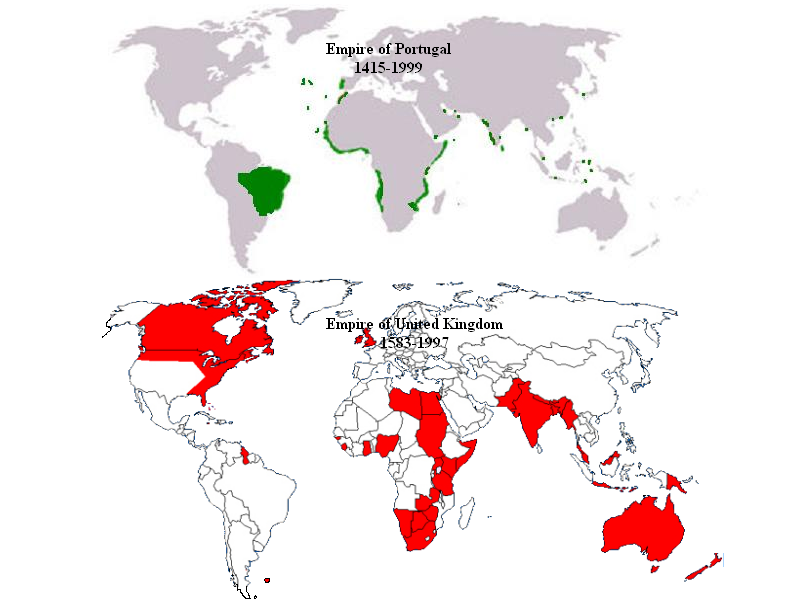
     Last month Queen Elizabeth II of England became the longest serving monarch in English history. In recognition of this achievement, long life, and astounding changes of the last sixty-three years, remembrance of and association with British success must also be paid homage. While England and the United Kingdom once ruled one of the largest, most expansion, and diverse empires in history, it is not the only one nor the oldest. While the British Empire is no more, her children still populate the globe on every continent, yet the present is similarly a child of the past.
     Before England's 1381 Peasant's Revolt, when Europe was still recovering from the Black Death, when the Byzantine Empire was on its last legs, and when the Hundred Year's War was still in force, England came into agreement with Portugal to safeguard each other regardless of the enemy. That agreement, the Anglo-Portuguese Alliance of 1373, still holds and is the oldest active alliance in the world.
     Two of the most powerful sea-faring nations of history signed an agreement to be friends to friends and enemies to enemies. The friendly terms between the two nations extends back to the beginning of the Crusades with temporary agreements before the definitive treaty centuries later.
     English-Portuguese ties became linked just before the Age of Exploration when Portugal circumnavigated Africa and boasted a proud sea-faring tradition both militarily and economically. Portugal's strength lent itself to English strength as the New World lands brought a wealth of resources and competition among the other European nations.
     While a 642 year long alliance between two powerful sea-faring nations seems remarkable, Portugal and England have been two of the most stable nations in world history. England's last invasion occurred in September 1066 while Portugal is the oldest nation-state in Europe and has had defined borders since 1139. Neither of these nations are phased by centuries of commitment, and both have heavily impacted the modern world through global enterprise and innovations.
     Portugal was the first global empire in history and extended over four continents. The first great European empire, Portugal surrendered its last colony, Macau, to China in 1999 after six centuries of global influence. Lisbon is the second oldest capitol city in Europe after Athens and is believed to have been established by the Phoenicians about 1200 B.C.
     The Anglo-Portuguese Alliance has been invoked several times over the centuries, notably during disastrous European wars. The two nations defeated France and Spain in the Seven Years War despite being outnumbered. During the Napoleonic invasion of Portugal in 1807, Britain sent its army to assist its ally, and the two nations successfully pushed Napoleon back into Spain. During World War I, Portugal sent troops to Northern France to aid England, and during World War II, Portugal provided the Azores archipelago as a naval base for the Allies and acted as an effective deterrent to keep Spain from joining the Axis nations. Most recently, the United Kingdom invoked the alliance during the Falkland War in 1982.
     Almost nothing lasts six and a half centuries. As the world continues to develop, trade and power change hands, yet for these small nations, history and friendship are inseparable regardless of threat, leadership, war, or century. Unwavering commitment and respect is nearly absent from history's annals, but to see a mutual respect and support endure the test of time and the tensions of empire, demonstrates the potential of what man is capable of when his heart is true.


 ___
Agatha Tyche

21.9.15

The Frontier

     With the advents of the Industrial Revolution and Globalism, the materialism of Capitalism has spread from Europe and America around the world. These dual events have enormously changed life in every region and nation around the world whether through locomotion and medicine or through colonization and exploitation. While these effects are uncontested, the residual philosophies prior to the Industrial Revolution's impacts in the early nineteenth century have placed the world, resources, and biological population limits into new perspectives.
     With the public discovery of a New World by Christopher Columbus's expeditions in the 1490s, Europe began an expansive invasion-settlement of these newly recognized lands. European nations began sending conquers to subdue native populations and explore the lands. Later, settlers, particularly in North America, made permanent homes along the coast to enable trade with their mother European nations. With the devastation of ninety-percent of native populations, the Europeans had half the world to extract wealth and resources from to send back to Europe. The Spanish and Portuguese focused on gold, silver, and precious materials to supplement their coffers while the French, Dutch, and British turned to fur and forestry.
     The Spanish and Portuguese did not make permanent plans of colonization and instead concentrated their efforts on extraction. The North American experience was different but similarly economically-oriented; settlers hunted several animals to extinction and cut huge swathes of forests that permanently changed the landscape and soil type. Because of the required manual labor and slow trans-Atlantic shipping, the extraction of New World resources escalated slowly and seemed to be able to last forever.
     With the improvements of steam and machine and the growing populations in both Europe and these New World settlements, resource extraction became mechanized to meet industrial needs. Never before had the provisions of nature been taxed so greatly to provide materials for the incredible population boom. The seemingly endless reserves of resources in the New World began to be depleted by the mid-nineteenth century.

     As the abundance of natural resources became more difficult to find and extract, the populations of Europe began to look elsewhere to meet their new industrial might, especially toward Africa and SouthEast Asia. The inhabitants of the New World, particularly in the United States where industrial growth was increasing to match Europe's, had to live in the reality of the stripped, barren landscapes. This proximity to the destructive greed of man birthed two movements in the United States just before the turn of the twentieth century. The first group continued the practices from the decades before and moved on to new lands that were farther west and previously inaccessible. The second group began a conservationist movement that sought to protect resources and restore land usefulness after strip mining and clear cutting forests.
     The first group, known to history as the frontiersmen, miners, and cowboys of the American West, continued to exploit the immense natural wealth of the land without regard to future uses. Despite the efforts of the conversation movement and the establishment of federal government regulations like the Environmental Protection Agency (EPA) in 1972 and Endangered Species Act (ESA) in 1973, the indoctrination of capitalist-consumerism of Americans and industrial countries requires escalated production to grow the economy and collect the money of consumers who buy things that they did not know they needed.
     The ecological term for the exploitation of natural resources because of their endless reserves in known as the Frontiersman Mentality or the Cowboy Mindset. While modern people might pride themselves on being green or practicing efficient, renewable business practices, the frontier's influence on the United States has not disappeared. Today Americans throw away more reusable materials than every before, especially non-degradable plastics. The Throwaway Mindset of a consumerist culture is directly related to the assumption that resources are endless and that there will always be new reserves to take from.
     This century as the global population begins to level off around eleven billion and the easiest reverses of metal, oil, and timber are used up, humanity will not be able to run away from its actions any more. Overlooking the effects of climate change, the economy, and agricultural needs, as the waste and debris of the civilized, industrial countries begins to choke the world, change will come from choice or inevitability. There is not another frontier.

 __    
Agatha Tyche